
Ethiopia Renewable Energy Market 2026-2034 | Size, Share, Analysis
Ethiopia Renewable Energy Market
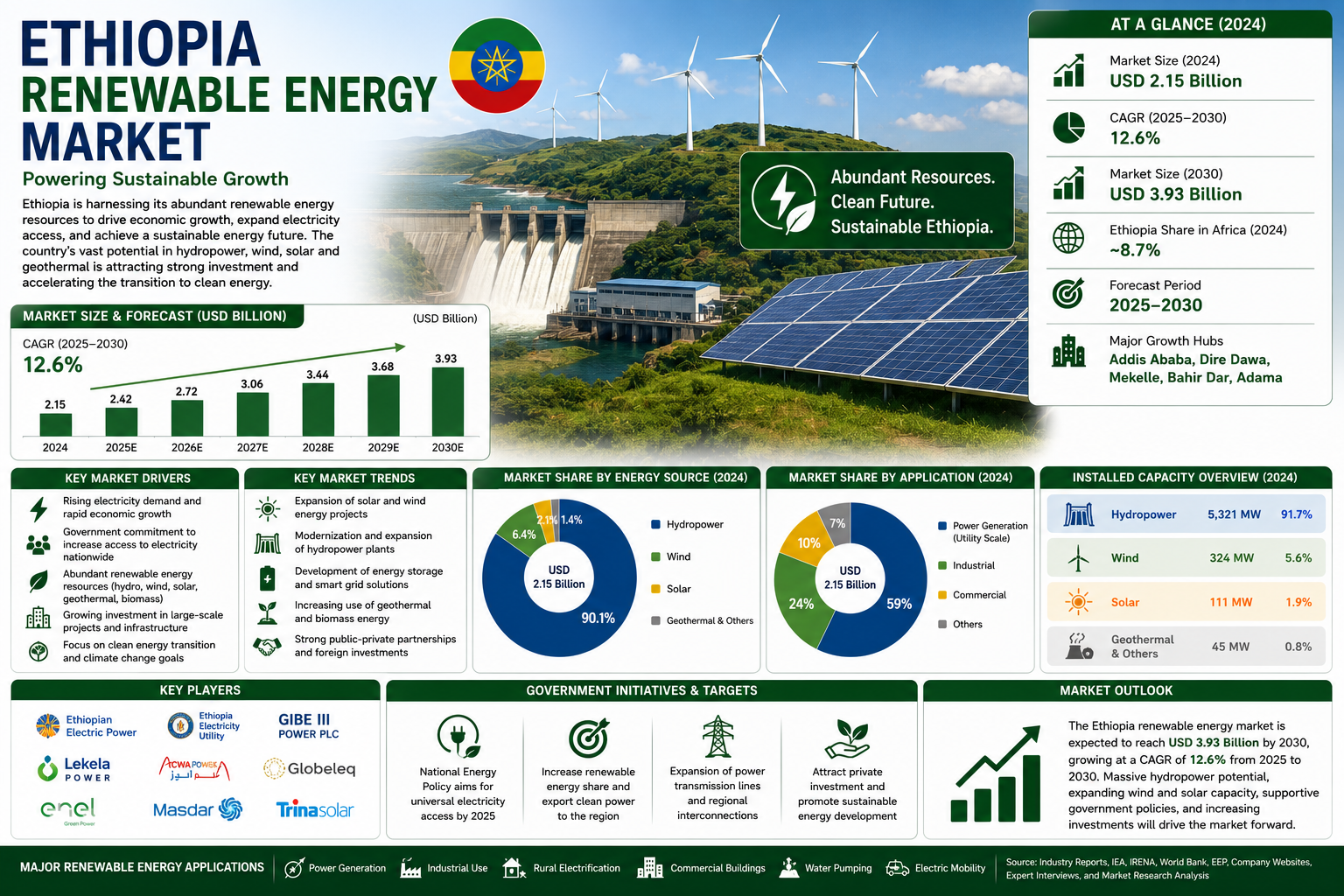
Ethiopia renewable energy market reached USD 960.90 Million 2025, is projected to reach USD 2,256.09 Million 2034, a growth rate (CAGR) of 8.91% 2026-2034.
ETHIOPIA, May 19, 2026 /EINPresswire.com/ --𝗠𝗮𝗿𝗸𝗲𝘁 𝗢𝘃𝗲𝗿𝘃𝗶𝗲𝘄:
The Ethiopia renewable energy market reached 𝗨𝗦𝗗 𝟵𝟲𝟬.𝟵𝟬 𝗠𝗶𝗹𝗹𝗶𝗼𝗻 in 2025 and is projected to reach 𝗨𝗦𝗗 𝟮,𝟮𝟱𝟲.𝟬𝟵 𝗠𝗶𝗹𝗹𝗶𝗼𝗻 by 2034, exhibiting a growth rate (𝗖𝗔𝗚𝗥) 𝗼𝗳 𝟴.𝟵𝟭% 𝗱𝘂𝗿𝗶𝗻𝗴 𝟮𝟬𝟮𝟲–𝟮𝟬𝟯𝟰. The Ethiopia renewable energy market is accelerating rapidly, anchored by the inauguration of the Grand Ethiopian Renaissance Dam — Africa's largest hydroelectric power plant at 5.15 GW that is expected to double the country's electricity output — a massive 8.4 GW wind and solar development by China's Ming Yang Smart Energy backed by an initial USD 7.47 billion investment, and the World Bank's USD 424 million ASCENT program to bring electricity to nearly six million people. The government's strategic push to diversify beyond hydropower, which currently accounts for 96% of electricity generation, is drawing unprecedented international investment into solar, wind, and geothermal energy across the country.
𝗪𝗵𝘆 𝗶𝘀 𝗛𝗼𝘁 𝗧𝗼𝗱𝗮𝘆 𝗘𝘁𝗵𝗶𝗼𝗽𝗶𝗮 𝗥𝗲𝗻𝗲𝘄𝗮𝗯𝗹𝗲 𝗘𝗻𝗲𝗿𝗴𝘆 𝗠𝗮𝗿𝗸𝗲𝘁?
The Grand Ethiopian Renaissance Dam was officially inaugurated in September 2025 as Africa's largest hydropower plant at 5.15 GW capacity; Ming Yang Smart Energy received an investment license to develop 8.4 GW of wind and solar projects across South Omo, Afar, and Somali regions; the World Bank approved USD 424 million for the ASCENT program to bring electricity to six million people; the Assela 100 MW wind farm began supplying clean energy to the national grid powering over 140,000 households; Ethiopia launched its first grid-connected solar rooftop project with bi-directional smart meters in Addis Ababa; and Ethio Telecom partnered with Huawei to launch Africa's inaugural Solar-on-Tower solution achieving a 40% reduction in diesel consumption.
𝗘𝘁𝗵𝗶𝗼𝗽𝗶𝗮 𝗥𝗲𝗻𝗲𝘄𝗮𝗯𝗹𝗲 𝗘𝗻𝗲𝗿𝗴𝘆 𝗠𝗮𝗿𝗸𝗲𝘁 Summary:
• The Grand Ethiopian Renaissance Dam, inaugurated in September 2025 at a cost of USD 5 billion, is transforming Ethiopia's energy landscape as Africa's largest hydroelectric facility with 5.15 GW of installed capacity across both powerhouses. The dam is expected to double the country's electricity production, providing massive baseload generation capacity to power industrial growth, urban expansion, and cross-border electricity exports. However, the government's new climate plan — released barely a month after inauguration — outlines ambitions to reduce heavy reliance on rainfall-dependent hydropower by accelerating investment in solar, wind, and biogas, acknowledging climate-driven drought risks to the hydropower-dominant energy system.
• China's Ming Yang Smart Energy is developing an 8.4 GW renewable energy portfolio comprising 5.4 GW of wind and 2.8 GW of solar capacity across the South Omo, Afar, and Somali regions, with an initial investment of USD 7.47 billion. A second investment tranche of USD 7.3 billion is funding green ammonia production alongside manufacturing of power transmission equipment and wind turbines domestically. This project represents a landmark shift toward large-scale private sector participation in Ethiopia's energy expansion through the independent power producer framework.
• The World Bank's ASCENT Ethiopia Program, approved in August 2025 with USD 400 million in IDA financing and a USD 24 million Denmark grant, is targeting electricity access for nearly six million people over five years. Building on the Ethiopia Electrification Program and the ADELE off-grid initiative, ASCENT is expanding on-grid connections while reducing connection costs for 480,000 low-income customers. Solar mini-grids installed by the Ethiopia Electric Utility are already providing approximately 4,000 connections and supplying electricity to around 20,000 people across 11 villages.
• The Assela 100 MW wind farm, financed by Denmark and built by Siemens Gamesa, began supplying clean energy to the national grid in May 2025, powering over 140,000 households annually. This project is strengthening Ethiopia's energy diversification strategy and demonstrating the viability of wind power as a complement to hydropower. The geothermal sector is also advancing, with Tulu Moye Geothermal Operations, Meridiam, and Reykjavik Geothermal in talks to resume development at the Tulu Moye site targeting an initial 50 MW by 2026.
• Ethiopia launched its first grid-connected solar rooftop project with bi-directional smart meters in Addis Ababa in June 2025. The 100 kWp system, inaugurated by the Minister of Water and Energy, allows households to both consume and feed surplus solar power back to the national grid — modeling decentralized clean energy adoption for urban areas. Simultaneously, Ethio Telecom and Huawei launched Africa's first Solar-on-Tower solution, reducing diesel consumption by 40% at telecom sites while demonstrating how vertical infrastructure can serve dual energy and telecommunications functions.
𝗛𝗼𝘄 𝗔𝗜 𝗶𝘀 𝗥𝗲𝘀𝗵𝗮𝗽𝗶𝗻𝗴 𝘁𝗵𝗲 𝗘𝘁𝗵𝗶𝗼𝗽𝗶𝗮 𝗥𝗲𝗻𝗲𝘄𝗮𝗯𝗹𝗲 𝗘𝗻𝗲𝗿𝗴𝘆 𝗠𝗮𝗿𝗸𝗲𝘁:
Artificial intelligence is increasingly transforming the Ethiopia renewable energy market, with AI-driven energy management capable of reducing operational losses by up to 20% according to the International Energy Agency, while smart grid technologies, predictive analytics, and automated load balancing systems are enhancing grid stability and optimizing the integration of diverse renewable sources across Ethiopia's rapidly expanding power infrastructure.
• 𝗔𝗜-𝗣𝗼𝘄𝗲𝗿𝗲𝗱 𝗦𝗺𝗮𝗿𝘁 𝗚𝗿𝗶𝗱 𝗠𝗮𝗻𝗮𝗴𝗲𝗺𝗲𝗻𝘁: AI-driven smart grid platforms leveraging real-time data analytics, IoT sensors, and automated control systems are enhancing grid stability across Ethiopia's expanding power network. These systems dynamically adjust energy flows based on real-time demand and supply conditions, optimizing load balancing as the grid integrates power from the 5.15 GW GERD alongside growing solar and wind inputs — a critical capability for managing a system currently 96% dependent on variable hydropower.
• 𝗣𝗿𝗲𝗱𝗶𝗰𝘁𝗶𝘃𝗲 𝗔𝗻𝗮𝗹𝘆𝘁𝗶𝗰𝘀 𝗳𝗼𝗿 𝗛𝘆𝗱𝗿𝗼𝗽𝗼𝘄𝗲𝗿 𝗢𝗽𝘁𝗶𝗺𝗶𝘇𝗮𝘁𝗶𝗼𝗻: Machine learning algorithms are analyzing hydrological data, rainfall patterns, and reservoir levels to optimize water release scheduling and power generation at Ethiopia's hydroelectric facilities. These predictive models are particularly valuable for managing the GERD's massive reservoir and the country's network of existing dams, helping operators maximize generation during wet seasons while conserving water resources during drought periods.
• 𝗔𝗜-𝗘𝗻𝗵𝗮𝗻𝗰𝗲𝗱 𝗦𝗼𝗹𝗮𝗿 𝗮𝗻𝗱 𝗪𝗶𝗻𝗱 𝗙𝗼𝗿𝗲𝗰𝗮𝘀𝘁𝗶𝗻𝗴: AI-powered weather prediction and generation forecasting models are improving the accuracy of solar irradiance and wind speed predictions, enabling grid operators to anticipate renewable output fluctuations and schedule complementary generation sources accordingly. These forecasting tools are essential as Ethiopia integrates the planned 8.4 GW of new solar and wind capacity into a grid that must balance intermittent generation with dispatchable hydropower.
• 𝗔𝗜 𝗳𝗼𝗿 𝗢𝗳𝗳-𝗚𝗿𝗶𝗱 𝗘𝗻𝗲𝗿𝗴𝘆 𝗢𝗽𝘁𝗶𝗺𝗶𝘇𝗮𝘁𝗶𝗼𝗻: AI-powered platforms are optimizing off-grid and mini-grid solar installations across rural Ethiopia, using machine learning to manage battery storage, predict consumption patterns, and balance generation with local demand. Platforms like SWaDE are already deploying AI to support small-scale farmers by optimizing agricultural water use and energy efficiency, demonstrating practical applications of AI-driven energy management in rural communities.
• 𝗔𝗜-𝗗𝗿𝗶𝘃𝗲𝗻 𝗣𝗿𝗲𝗱𝗶𝗰𝘁𝗶𝘃𝗲 𝗠𝗮𝗶𝗻𝘁𝗲𝗻𝗮𝗻𝗰𝗲: AI-powered condition monitoring systems are analyzing vibration, temperature, and performance data from wind turbines, solar inverters, and hydroelectric turbines to predict equipment failures and schedule maintenance before breakdowns occur. These systems are reducing unplanned downtime and extending asset lifespans across Ethiopia's growing renewable infrastructure, particularly for remote wind and solar installations where maintenance logistics present significant challenges.
𝗥𝗲𝗾𝘂𝗲𝘀𝘁 𝗳𝗼𝗿 𝗮 𝘀𝗮𝗺𝗽𝗹𝗲 𝗿𝗲𝗽𝗼𝗿𝘁 𝗣𝗗𝗙: https://www.imarcgroup.com/ethiopia-renewable-energy-market/requestsample
𝗠𝗮𝗿𝗸𝗲𝘁 𝗧𝗿𝗲𝗻𝗱𝘀 𝗮𝗻𝗱 𝗜𝗻𝘀𝗶𝗴𝗵𝘁𝘀:
• Ethiopia's strategic diversification beyond hydropower is reshaping the energy mix, with the government's climate plan explicitly targeting reduced dependence on the 96% hydropower-dominant system through accelerated solar, wind, and biogas investment. The 8.4 GW Ming Yang portfolio and the Assela wind farm are concrete steps toward building a more resilient and balanced generation portfolio that can withstand climate-driven drought impacts on hydroelectric output.
• International financial commitments are reaching unprecedented levels, with the World Bank's USD 424 million ASCENT program, USD 400 million in transmission infrastructure agreements, and over USD 13 billion in energy investment agreements signed at the Invest in Ethiopia forum. These multilateral and bilateral partnerships are accelerating grid expansion, generation capacity, and electricity access while strengthening institutional capabilities and aligning Ethiopia's regulatory framework with international standards.
• The off-grid and distributed energy sector is gaining momentum, with Ethiopia's first grid-connected solar rooftop project introducing bi-directional metering in Addis Ababa, solar mini-grids serving 20,000 people across 11 rural villages, and the ASCENT program reducing connection costs for 480,000 low-income households. These decentralized solutions are complementing large-scale grid infrastructure to reach underserved populations across Ethiopia's diverse geography.
• Geothermal energy development is advancing despite setbacks, with the Tulu Moye project — involving Meridiam and Reykjavik Geothermal — in negotiations to resume operations targeting an initial 50 MW capacity. Ethiopia is also targeting implementation of 17 geothermal projects to tap into the East African Rift's substantial geothermal potential, adding a dispatchable, weather-independent renewable source to complement the country's hydropower and variable solar and wind assets.
• The convergence of telecommunications and renewable energy is creating innovative dual-use infrastructure models, as demonstrated by Ethio Telecom and Huawei's Solar-on-Tower solution that achieves 40% diesel reduction while addressing urban space constraints. This approach is expanding renewable energy adoption beyond traditional power generation into the telecommunications sector, with potential applications across Ethiopia's growing network of cellular towers and digital infrastructure.
• Ethiopia's clean energy leadership is positioning the country as a regional power hub, with the GERD's 5.15 GW capacity and cross-border transmission infrastructure enabling electricity exports to neighboring countries. The Digital Ethiopia 2030 strategy is connecting energy modernization with broader economic digitalization, while the government's framework for independent power producers is attracting private sector investment at scale.
𝗠𝗮𝗿𝗸𝗲𝘁 𝗚𝗿𝗼𝘄𝘁𝗵 𝗗𝗿𝗶𝘃𝗲𝗿𝘀:
𝗚𝗼𝘃𝗲𝗿𝗻𝗺𝗲𝗻𝘁 𝗣𝗼𝗹𝗶𝗰𝘆 𝗮𝗻𝗱 𝗦𝘁𝗿𝗮𝘁𝗲𝗴𝗶𝗰 𝗘𝗻𝗲𝗿𝗴𝘆 𝗣𝗹𝗮𝗻𝗻𝗶𝗻𝗴
Ethiopia's government is driving renewable energy expansion through comprehensive national strategies that prioritize energy security, universal electrification, and emissions reduction. The country's climate plan explicitly targets diversification away from 96% hydropower dependence, while institutional reforms, streamlined procurement processes, and the independent power producer framework are providing regulatory clarity and attracting investment. The integration of renewable energy objectives into the Digital Ethiopia 2030 strategy and the 10-year national development plan demonstrates the government's commitment to positioning clean energy as the foundation of industrial growth, rural electrification, and regional competitiveness.
𝗜𝗻𝘁𝗲𝗿𝗻𝗮𝘁𝗶𝗼𝗻𝗮𝗹 𝗙𝗶𝗻𝗮𝗻𝗰𝗶𝗮𝗹 𝗦𝘂𝗽𝗽𝗼𝗿𝘁 𝗮𝗻𝗱 𝗜𝗻𝘃𝗲𝘀𝘁𝗺𝗲𝗻𝘁
Multilateral and bilateral financial partnerships are providing transformative capital for Ethiopia's energy expansion. The World Bank's USD 424 million ASCENT program, Denmark's financing of the Assela wind farm, Ming Yang's USD 7.47 billion initial investment in 8.4 GW of solar and wind capacity, and over USD 13 billion in cumulative energy investment agreements are collectively building generation capacity, expanding grid infrastructure, and improving electricity access. These international partnerships combine financial resources with technical expertise, strengthening institutional capabilities and aligning Ethiopia's energy sector with global best practices.
𝗧𝗲𝗰𝗵𝗻𝗼𝗹𝗼𝗴𝗶𝗰𝗮𝗹 𝗜𝗻𝗻𝗼𝘃𝗮𝘁𝗶𝗼𝗻 𝗮𝗻𝗱 𝗘𝗻𝗲𝗿𝗴𝘆 𝗗𝗶𝘃𝗲𝗿𝘀𝗶𝗳𝗶𝗰𝗮𝘁𝗶𝗼𝗻
Technological advancement is enabling Ethiopia to deploy a diverse portfolio of renewable solutions beyond traditional hydropower. The country's first bi-directional solar rooftop system, Africa's inaugural Solar-on-Tower telecommunications solution, advanced wind turbine technology at Assela, and emerging geothermal development at Tulu Moye demonstrate the breadth of technological innovation reaching Ethiopia's energy market. AI-powered grid management, predictive analytics for hydropower optimization, and smart metering infrastructure are enhancing operational efficiency across the entire value chain.
𝗠𝗮𝗿𝗸𝗲𝘁 𝗦𝗲𝗴𝗺𝗲𝗻𝘁𝗮𝘁𝗶𝗼𝗻:
IMARC Group's research categorizes the Ethiopia renewable energy market as follows:
𝗕𝘆 𝗧𝘆𝗽𝗲:
• Solar
• Wind
• Hydro
• Bioenergy
• Others
𝗕𝘆 𝗥𝗲𝗴𝗶𝗼𝗻:
• Addis Ababa
• Oromia Region
• Amhara Region
• SNNPR Region
• Tigray Region
• Others
𝗞𝗲𝘆 𝗣𝗹𝗮𝘆𝗲𝗿𝘀:
The competitive landscape of the Ethiopia renewable energy market includes a comprehensive analysis of key player positioning, market structure, top winning strategies, competitive dashboards, and company evaluation quadrants. Detailed profiles of all major companies are provided within the full IMARC Group research report.
𝗥𝗲𝗰𝗲𝗻𝘁 𝗡𝗲𝘄𝘀 𝗮𝗻𝗱 𝗗𝗲𝘃𝗲𝗹𝗼𝗽𝗺𝗲𝗻𝘁𝘀:
𝗦𝗲𝗽𝘁𝗲𝗺𝗯𝗲𝗿 𝟮𝟬𝟮𝟱: Ethiopia officially inaugurated the Grand Ethiopian Renaissance Dam, Africa's largest hydroelectric power plant with 5.15 GW of installed capacity, expected to double the country's electricity production and position Ethiopia as a regional clean energy leader.
𝗔𝘂𝗴𝘂𝘀𝘁 𝟮𝟬𝟮𝟱: The World Bank approved the USD 424 million ASCENT Ethiopia Program, comprising USD 400 million in IDA financing and a USD 24 million Denmark grant, to bring clean and reliable electricity to nearly six million people over five years.
𝗝𝘂𝗻𝗲 𝟮𝟬𝟮𝟱: Ethiopia launched its first grid-connected solar rooftop project with bi-directional smart meters in Addis Ababa — a 100 kWp system allowing households to both consume and feed surplus solar power to the national grid.
𝗠𝗮𝘆 𝟮𝟬𝟮𝟱: The Assela 100 MW wind farm, financed by Denmark and built by Siemens Gamesa, began supplying clean energy to the national grid, powering over 140,000 households annually and strengthening Ethiopia's energy diversification strategy.
𝟮𝟬𝟮𝟱: Ethio Telecom and Huawei launched Africa's first Solar-on-Tower solution in Addis Ababa, achieving a 40% reduction in diesel consumption at telecom sites while demonstrating innovative dual-use infrastructure combining telecommunications and renewable energy.
𝟮𝟬𝟮𝟲: China's Ming Yang Smart Energy received an investment license from the Ethiopian Investment Commission to develop 8.4 GW of wind and solar capacity across South Omo, Afar, and Somali regions, with an initial investment of USD 7.47 billion and a second tranche of USD 7.3 billion for green ammonia and equipment manufacturing.
𝗕𝗿𝗼𝘄𝘀𝗲 𝘁𝗵𝗲 𝗳𝘂𝗹𝗹 𝗿𝗲𝗽𝗼𝗿𝘁 𝘄𝗶𝘁𝗵 𝗧𝗢𝗖 𝗮𝗻𝗱 𝗹𝗶𝘀𝘁 𝗼𝗳 𝗳𝗶𝗴𝘂𝗿𝗲𝘀: https://www.imarcgroup.com/ethiopia-renewable-energy-market
𝗡𝗼𝘁𝗲: 𝗜𝗳 𝘆𝗼𝘂 𝗿𝗲𝗾𝘂𝗶𝗿𝗲 𝗮𝗻𝘆 𝘀𝗽𝗲𝗰𝗶𝗳𝗶𝗰 𝗶𝗻𝗳𝗼𝗿𝗺𝗮𝘁𝗶𝗼𝗻 𝘁𝗵𝗮𝘁 𝗶𝘀 𝗻𝗼𝘁 𝗰𝗼𝘃𝗲𝗿𝗲𝗱 𝗰𝘂𝗿𝗿𝗲𝗻𝘁𝗹𝘆 𝘄𝗶𝘁𝗵𝗶𝗻 𝘁𝗵𝗲 𝘀𝗰𝗼𝗽𝗲 𝗼𝗳 𝘁𝗵𝗲 𝗿𝗲𝗽𝗼𝗿𝘁, 𝘄𝗲 𝘄𝗶𝗹𝗹 𝗽𝗿𝗼𝘃𝗶𝗱𝗲 𝘁𝗵𝗲 𝘀𝗮𝗺𝗲 𝗮𝘀 𝗮 𝗽𝗮𝗿𝘁 𝗼𝗳 𝘁𝗵𝗲 𝗰𝘂𝘀𝘁𝗼𝗺𝗶𝘇𝗮𝘁𝗶𝗼𝗻.
Other Country Report by IMARC Group:
Netherlands Subscription Box Market 2026: https://www.imarcgroup.com/netherlands-subscription-box-market
Netherlands Soft Skills Training Market 2026: https://www.imarcgroup.com/netherlands-soft-skills-training-market
Netherlands Automotive Wiring Harness Market 2026: https://www.imarcgroup.com/netherlands-automotive-wiring-harness-market
Netherlands CCTV Camera Market 2026: https://www.imarcgroup.com/netherlands-cctv-camera-market
Netherlands Electric Truck Market 2026: https://www.imarcgroup.com/netherlands-electric-truck-market
𝗔𝗯𝗼𝘂𝘁 𝗨𝘀
IMARC Group is a global management consulting firm that helps the world's most ambitious changemakers to create a lasting impact. The company provides a comprehensive suite of market entry and expansion services including thorough market assessment, feasibility studies, company incorporation assistance, factory setup support, regulatory approvals and licensing navigation, branding, marketing and sales strategies, competitive landscape and benchmarking analyses, pricing and cost research, and procurement research.
𝗖𝗼𝗻𝘁𝗮𝗰𝘁 𝗨𝘀
𝗜𝗠𝗔𝗥𝗖 𝗚𝗿𝗼𝘂𝗽
134 N 4th St., Brooklyn, NY 11249, USA
𝗘𝗺𝗮𝗶𝗹: sales@imarcgroup.com
𝗧𝗲𝗹. 𝗡𝗼.: (D) +91 120 433 0800
𝗨𝗻𝗶𝘁𝗲𝗱 𝗦𝘁𝗮𝘁𝗲𝘀: +1-201-971-6302
Allan Baker
MAPEX INDUSTRIES
+1 631-791-1145
email us here
Legal Disclaimer:
EIN Presswire provides this news content "as is" without warranty of any kind. We do not accept any responsibility or liability for the accuracy, content, images, videos, licenses, completeness, legality, or reliability of the information contained in this article. If you have any complaints or copyright issues related to this article, kindly contact the author above.
